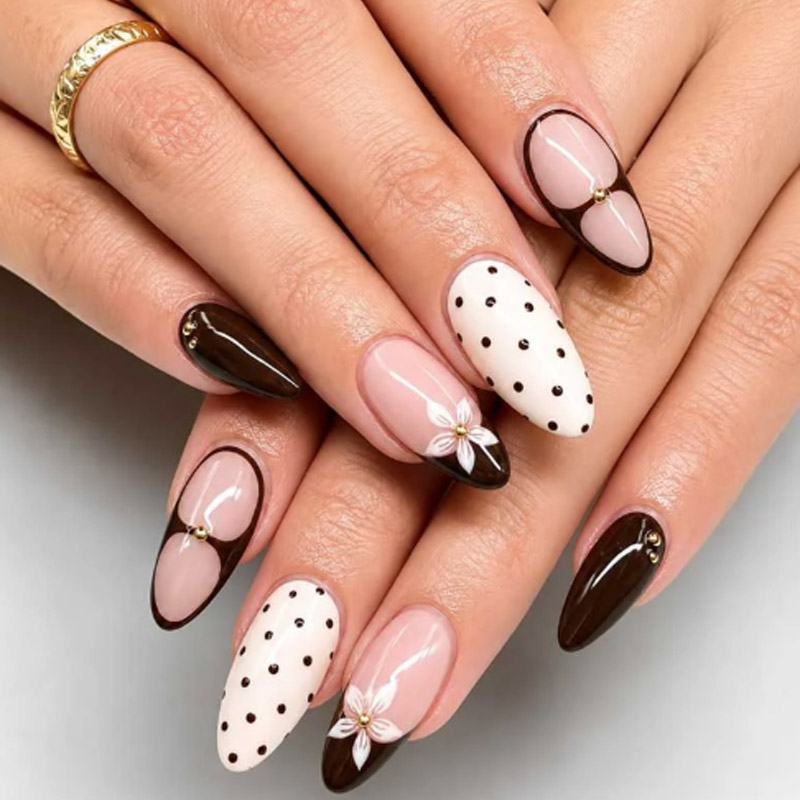
When sourcing private label or custom press-on nails, one of the first questions buyers often ask is:
> “Are you a press on nail factory or a trading company?”
It is an understandable question, but it is not enough to determine whether a supplier is suitable for your project.
A press on nail factory may provide direct access to sampling, handmade production, quality control, and production records. A trading company may coordinate several specialized suppliers and offer broader sourcing support. In some supply chains, a manufacturer may also outsource selected packaging, accessories, printing, or other processes.
For buyers, the real objective should therefore be to understand who controls each part of the product.
Who makes the nail tips? Who applies the color? Where is handmade artwork completed? Who assembles the retail kits? Who inspects the finished nails? Who orders the packaging? Where are approved samples stored? Who is responsible when something needs to be corrected?
Those questions reveal much more about a supplier than the words “factory direct.”
This guide explains how beauty brands, wholesalers, distributors, and private label buyers can evaluate a press on nail factory, verify its actual capabilities, and determine whether its production system matches the type of collection they want to build.
What Does a Press On Nail Factory Actually Do?
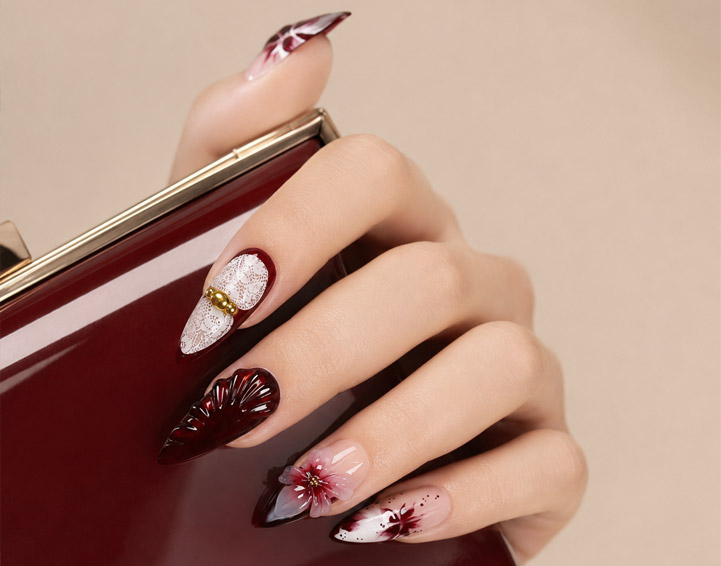
A press on nail factory should have direct involvement in manufacturing or finishing the nail products being supplied.
Depending on the manufacturer’s business model, its internal capabilities may include:
- Nail tip processing
- 表面の準備
- Color application
- Cat-eye or special-effect finishing
- 手描き
- ラインストーン 配置
- 3Dデコレーション
- Product inspection
- Set assembly
- Packing
Not every press on nail factory needs to manufacture every component internally.
For example, packaging boxes may come from a packaging specialist, printing may be completed by another supplier, and accessory items such as files or preparation pads may come from separate factories.
That is common in many manufacturing supply chains.
The important issue is transparency.
A buyer should understand which operations the press on nail factory controls directly and which operations depend on external partners.
What Does a Trading Company Do?
A trading company generally manages purchasing and supplier coordination rather than performing all manufacturing itself.
It may work with:
- Nail manufacturers
- Packaging suppliers
- Printing factories
- Accessory suppliers
- Logistics providers
This model is not automatically a problem.
A capable trading company can sometimes simplify a project involving multiple product categories.
The risk appears when buyers believe they are working directly with a press on nail factory but the supplier is actually passing requirements through several layers without explaining the production structure.
Additional communication layers can make it harder to answer questions such as:
- Why did the sample change?
- Which material is actually being used?
- Who has the approved reference?
- Where did the decoration problem occur?
- Can the same process be repeated?
This is why verification should focus on operational control rather than supplier titles alone.
Why Buyers Often Prefer Working With a Press On Nail Factory
For custom projects, direct communication with a press on nail factory can provide several practical advantages.
Faster Technical Feedback
If a design includes complicated elements such as 3D flowers, hand painting, cat-eye effects, or large charms, production staff can often identify manufacturing issues during sampling.
For example, they may tell the buyer that:
- A flower is too large for small nail sizes.
- A charm needs another placement.
- A certain artwork layout is difficult to repeat consistently.
- The packaging needs additional clearance.
The closer the communication is to the production team, the easier it can be to resolve these details.
Better Sample-to-Production Control
An important part of private label development is ensuring that the approved sample remains the reference for bulk production.
A press on nail factory should have a clear system for recording:
- 形状
- 長さ
- サイズ構成
- ベースカラー
- 終了
- アートワーク
- 装飾
- 包装
That makes future reorders easier to manage.
More Visibility Into Production
Direct manufacturers may also provide more useful information about:
- Production steps
- Inspection points
- Handmade processes
- Available equipment
- Packaging workflow
However, buyers should verify these capabilities rather than assuming they exist simply because the supplier calls itself a factory.
Start Verification With the Product You Actually Need
Do not evaluate a press on nail factory only by asking for a general company introduction.
Start with your intended product.
If you need handmade floral nails, ask to see handmade floral production.
If you want short square mass-market products, ask to see short square products.
If you need private label boxes, ask to see the packaging workflow.
Your verification checklist should match the project.
A supplier may be very capable at producing simple standardized nails but less experienced with:
- 手描きのデザイン
- 3D フラワーズ
- High-detail decoration
- Complicated ten-finger compositions
Another press on nail factory may specialize in handmade products but not be the best fit for large quantities of simple standardized designs.
The correct supplier depends on what you need.
Ask Which Production Steps Are Done In-House
This is one of the most useful questions you can ask.
Instead of:
> “Are you a factory?”
ask:
> “Which steps of this product are completed in your facility?”
For a custom press-on nail project, the answer might include:
- Base nail preparation
- Color coating
- Design work
- 手描き
- 装飾
- Inspection
- Set packing
Then ask which steps are outsourced.
例えば:
- Nail tip moulding
- Packaging printing
- Accessory production
This gives you a realistic map of the supply chain.
A trustworthy press on nail factory should not need to pretend that every component is manufactured under one roof.
Transparency is more useful than an exaggerated claim.
Verify Handmade Production Capability
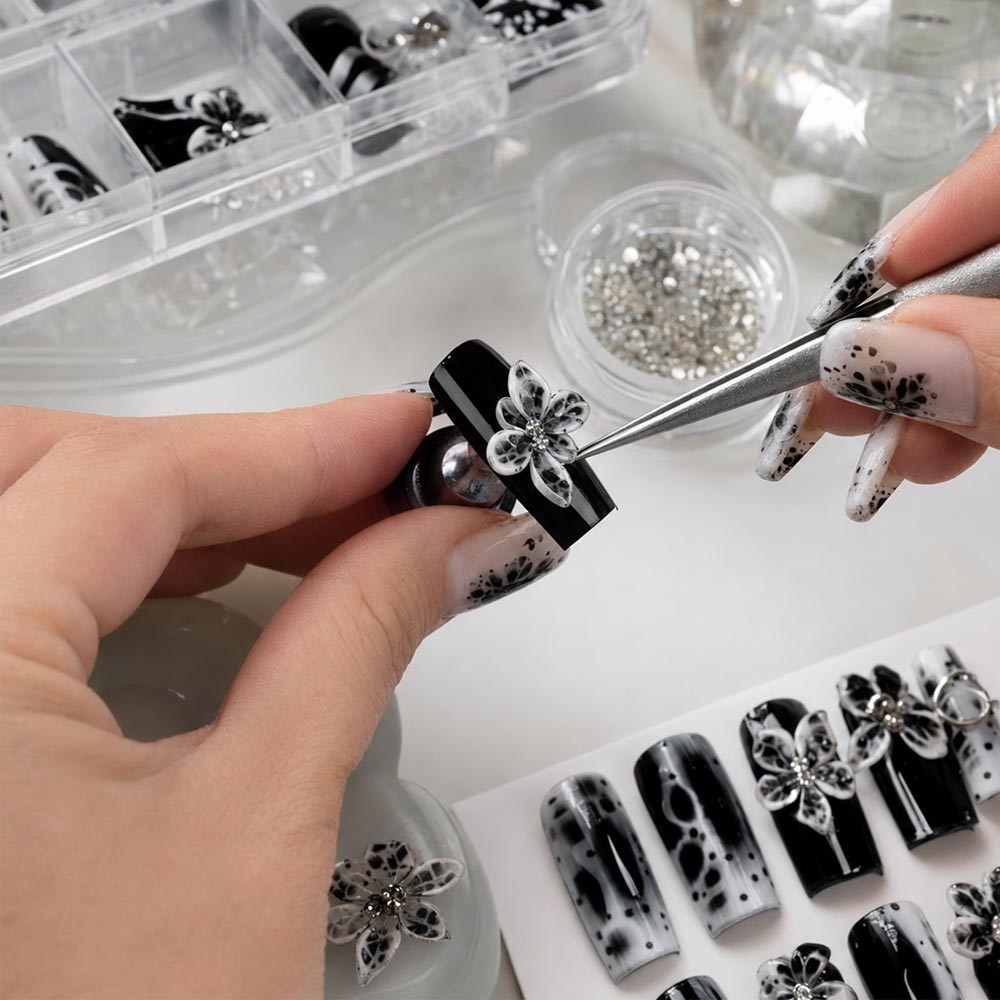
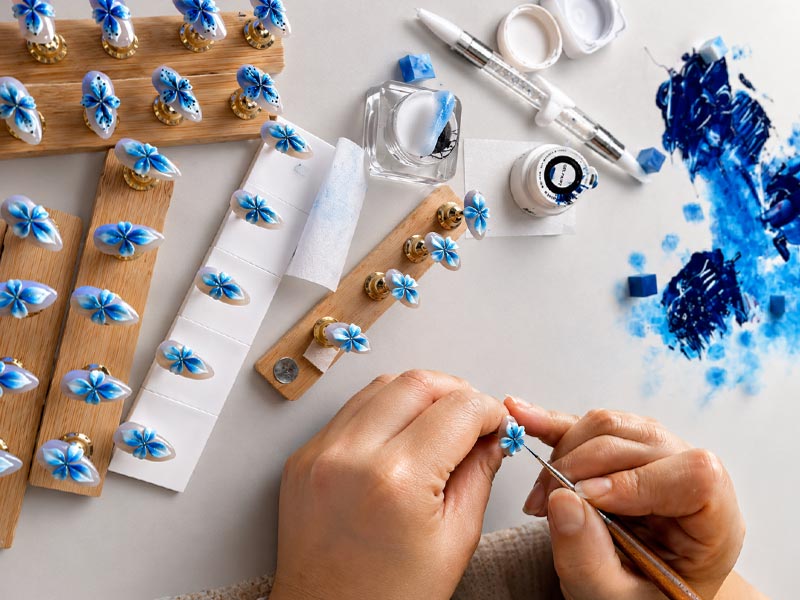
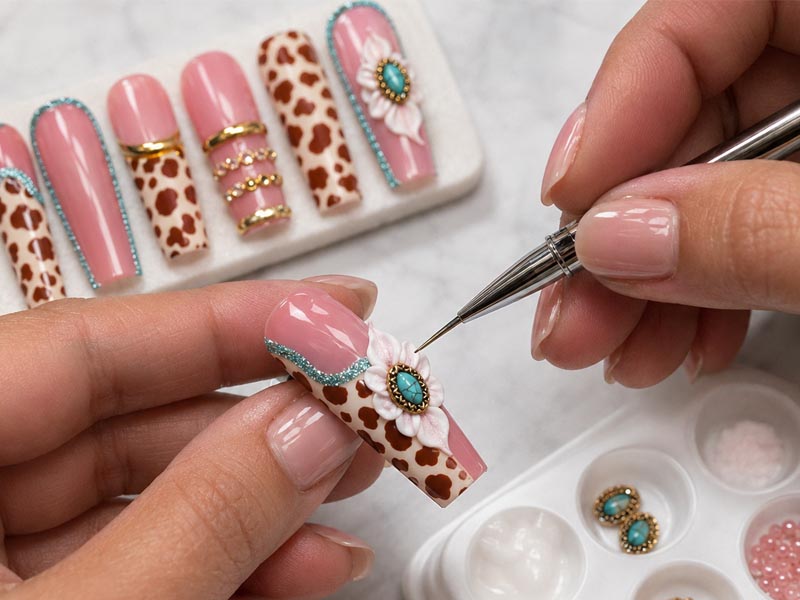
If your brand plans to sell handmade nails, verify whether the supplier actually has people performing the relevant work.
Ask to see examples of:
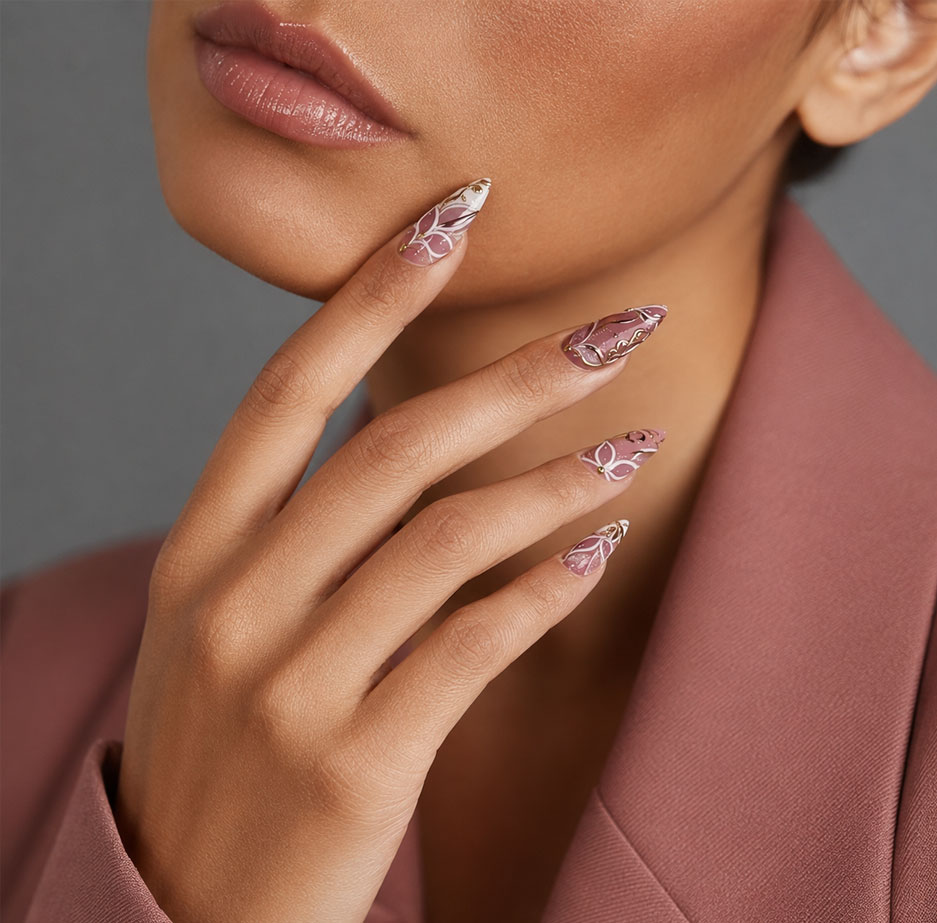
- 手描きの花
- ファインラインアートワーク
- 3D フラワーズ
- ラインストーン 配置
- パール配置
- ホイル
- 彫刻の詳細
Then ask how the press on nail factory controls variation.
Handmade work naturally allows small differences, but the overall product should still follow an approved standard.
Useful questions include:
- Are workers assigned to specific techniques?
- How is the approved sample shown to production workers?
- How are decoration positions defined?
- How are finished sets inspected?
- How are reorders matched with previous batches?
バイヤーはXingyi'sをレビューすることができます 手作りカスタムプレスオンネイルコレクション when comparing different levels of handmade design complexity.
Ask to See the Sampling Process
Sampling tells buyers a great deal about how a press on nail factory manages custom projects.
A controlled process should be able to track revisions.
例えば:
V1: first concept sample
V2: corrected flower size and color
V3: final approved sample
The supplier should understand which version is current.
尋ねる:
- Who prepares samples?
- Who receives buyer feedback?
- How are revisions recorded?
- Is the final sample kept for production?
- How long are reference samples retained?
A supplier that cannot clearly identify the approved sample may have difficulty controlling future production.
Verify Shape and Size Capability
A press on nail factory should be able to explain its available nail shapes and sizes.
Ask for information on:
- アーモンド
- 広場
- オーバル
- スクオーバル
- 棺
- スティレット
Then confirm available lengths:
- 短い
- 中
- 長
Do not rely only on shape names.
Ask for:
- Physical samples
- Width measurements
- Length measurements
- Size charts
Different factories can interpret terms such as “medium almond” differently.
If size and fit are important to your collection, Xingyi’s 形状とサイズのガイド can be used when preparing the specification.
Check Whether the Factory Can Handle Multiple Design Levels
Many beauty brands eventually need more than one type of press-on nail.
A collection might include:
Core Products
- 固体色
- フランス語
- ヌード
- 単純なグラデーション
Fashion Products
- 猫目
- クロム
- ゼリー
- Small decoration
Handmade Products
- Flowers
- 真珠
- ラインストーン
- 詳細なアートワーク
A flexible press on nail factory should be able to explain which of these product levels it can manufacture reliably.
If the supplier cannot produce every category, that is not necessarily a problem.
The important question is whether its capabilities match your actual assortment strategy.
Ask How Color Is Controlled
Color consistency becomes particularly important when a product is reordered.
Ask the press on nail factory how it records approved colors.
Useful references can include:
- Physical approved samples
- Internal color codes
- Standardized color references
- Written specifications
Digital images alone can be unreliable because screens display color differently.
This becomes especially important with:
- ヌード
- ブルゴーニュ
- パステル
- Sheer colors
- Metallic finishes
If a factory produces the first batch successfully but cannot reproduce the color later, the product becomes difficult to maintain as a long-term SKU.
Ask How Quality Control Works
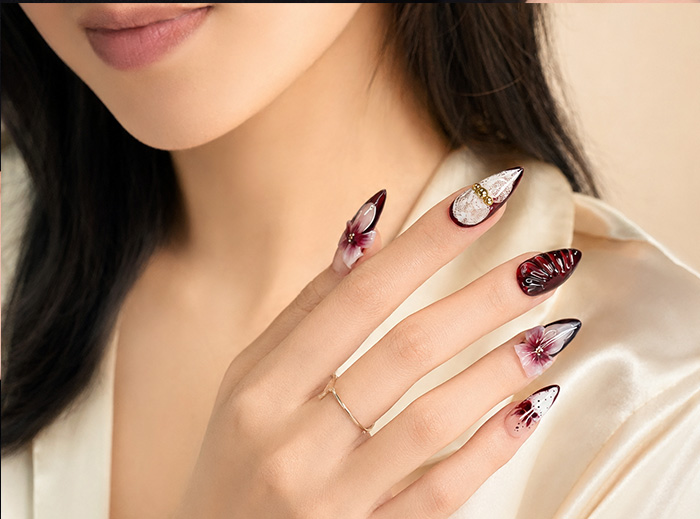
Do not accept “we have strict QC” as a complete answer.
Ask the press on nail factory what is actually inspected.
For press-on nails, inspection may include:
- 正しい形
- Correct size
- Surface cleanliness
- 色の一貫性
- アートワーク
- 装飾の量
- Decoration placement
- Set completeness
- 包装
Quality-management frameworks such as ISO 9001 emphasize controlled processes, documented information, monitoring, performance evaluation, and continual improvement. ISO also specifically describes ISO 9001 as a useful supply-chain tool when evaluating suppliers.
Certification alone does not prove that every nail set will be perfect.
Buyers still need product-specific standards.
強い press on nail factory should be able to explain how its internal processes connect with the requirements of your particular SKU.
Understand What Factory Audits Can and Cannot Tell You
For larger projects, buyers may conduct a factory audit themselves or use an independent auditing organization.
An audit can help verify:
- Facility existence
- Production areas
- Process control
- Employee responsibilities
- Quality-management procedures
- Record keeping
ISO 19011:2026 provides internationally recognized guidance for auditing management systems and managing audit programs.
But an audit should not replace product sampling.
A well-organized press on nail factory can still produce a sample that does not meet your design needs.
Similarly, an attractive sample does not automatically prove the factory has strong production controls.
Buyers should consider both.
Verify Packaging Responsibility
A private label project often includes custom packaging.
Ask whether the press on nail factory:
- Designs packaging internally
- Coordinates with a packaging supplier
- Receives buyer-provided boxes
- Packs finished retail sets
Then confirm who checks:
- Print version
- ロゴ
- Box size
- Tray
- Insert card
- アクセサリー
Packaging errors can occur even when the nails themselves are correct.
例えば:
- Correct nails in the wrong box
- Wrong insert card
- Incorrect shape label
- Missing accessory
The full retail kit therefore needs a final inspection.
Xingyi の カスタマイズされたサービス can be used to discuss nail development and private label packaging as part of the same project.
Ask Who Controls Accessories
Retail sets may include:
- ネイルグルー
- 粘着タブ
- ファイル
- 木製スティック
- 準備パッド
These are often sourced separately from the nail tips.
Ask the press on nail factory:
- Which accessories are produced internally?
- Which are purchased externally?
- How are incoming accessories inspected?
- Can specifications be kept consistent for repeat orders?
A factory does not need to manufacture every accessory itself.
It does need to control what ultimately goes into your retail package.
Verify Capacity With Questions, Not Claims
Suppliers frequently use phrases such as:
- Large production capacity
- Fast delivery
- Stable supply
These statements are difficult to evaluate without context.
Instead, ask the press on nail factory practical questions:
- How many production lines or teams handle this product type?
- Are handmade and standardized products made by different teams?
- What happens during peak season?
- How are urgent seasonal orders managed?
- Does production time change with design complexity?
A highly detailed handmade nail takes a different workflow from a simple solid-color set.
Capacity should therefore be discussed by product type.
Look at the Production Area Relevant to Your Product
If you conduct a video inspection or physical visit, do not focus only on the entrance, showroom, or company logo.
Ask to see where your product would actually be made.
For handmade nails, that may include:
- Design workstations
- Decoration areas
- Inspection
- Set assembly
For standardized products, relevant areas may be different.
The purpose is not to demand access to every confidential process.
It is to verify that the press on nail factory has operations consistent with the capabilities it claims.
Do Not Judge a Factory Only by Its Showroom
A beautiful showroom can be useful for reviewing products, but it does not prove manufacturing capability.
Likewise, a modest showroom does not automatically indicate weak production.
Evaluate the press on nail factory according to:
- Relevant samples
- Production processes
- Communication
- Documentation
- Quality control
- Reorder capability
The question is not how impressive the meeting room looks.
The question is whether the factory can repeatedly make your product.
Ask How Reorders Are Managed
A successful SKU should not need to be reinvented every time.
Ask the press on nail factory how it retains:
- 製品コード
- 形状
- サイズミックス
- 色
- アートワーク
- 装飾
- 包装
- Golden sample
Then ask how changes are controlled.
If the original material, nail mould, decoration, or color system needs to change, the supplier should communicate that before the next bulk order.
This is particularly important for brands building permanent collections.
Use a Golden Sample
Once the product is approved, both buyer and press on nail factory should ideally retain a reference sample.
This golden sample can help confirm:
- 色
- 終了
- アートワーク
- 装飾
- 形状
- Complete set appearance
For handmade products, physical references are particularly useful because photographs cannot perfectly communicate texture, metallic reflection, or three-dimensional details.
The golden sample should have:
- SKU code
- Approval date
- Version number
That prevents confusion with older sample versions.
Watch for Supplier Verification Red Flags
Potential warning signs include:
- Refusing to explain which processes are outsourced
- Product samples that do not match stated capabilities
- Different employees giving conflicting production information
- No clear sample revision records
- No system for retaining approved samples
- Unclear quality standards
- Inconsistent product specifications between conversations
- Inability to explain where important production steps occur
One issue alone does not automatically disqualify a press on nail factory.
Repeated uncertainty should encourage deeper verification.
A Practical Press On Nail Factory Checklist
Before approving a supplier, verify the following areas.
Company
- Business information reviewed
- Manufacturing location understood
- Main product categories confirmed
生産
- Relevant processes observed or explained
- Handmade capability verified where needed
- Outsourced steps identified
製品
- Shapes verified
- Size range reviewed
- Materials discussed
- Finishes confirmed
- Decoration capability confirmed
サンプリング
- Revision process clear
- Final approval process clear
- Golden sample retained
Quality
- Inspection stages explained
- Defects can be defined
- Finished sets are checked
包装
- Packaging responsibility understood
- Accessories identified
- Final retail-set inspection confirmed
再注文
- SKU records retained
- Approved references available
- Material or process changes communicated
This gives buyers a more meaningful picture of a press on nail factory than a simple yes-or-no question about whether the supplier owns a facility.
Press On Nail Factory or Trading Company: Which Should You Choose?
There is no universal answer.
A direct press on nail factory may be particularly suitable when:
- Your designs require frequent technical communication.
- You need handmade customization.
- You want detailed control over repeat production.
- You expect ongoing product development.
A trading company may be useful when:
- Your project contains many unrelated product categories.
- You need one organization coordinating several suppliers.
- The company provides strong sourcing and inspection capabilities.
The key issue is transparency and control.
A capable trading company that clearly explains its manufacturing partners can be more useful than a poorly managed factory.
Likewise, an experienced press on nail factory with strong sampling, quality control, and documentation can provide valuable direct support for brands focused specifically on press-on nails.
Choose based on the complete production system.
結論
Finding a press on nail factory should not end with verifying that a building and production team exist.
Beauty brands need to understand how the supplier turns a design into a repeatable product.
Verify:
- Which processes happen internally
- Which are outsourced
- How samples are revised
- How shapes and sizes are controlled
- How handmade designs are reproduced
- How finished products are inspected
- How packaging and accessories are managed
- How successful SKUs are reordered
The strongest supplier relationships are built on visibility.
A press on nail factory does not need to produce every box, file, adhesive tab, and accessory itself. What matters is whether it clearly understands the complete product and can control the suppliers and processes that contribute to the finished set.
Do not make your decision based only on company labels, showroom photographs, or broad claims about capacity.
Review relevant samples, ask process-specific questions, keep approved physical references, and confirm how the supplier will reproduce the same product later.
If you are evaluating a press on nail factory for a custom or private label project, review Xingyi’s 手作りカスタムプレスオンネイルコレクション and contact the team with your product, packaging, sampling, and verification requirements.