A beautiful sample can make a strong first impression, but it does not tell you everything you need to know about a press on nail supplier.
The real challenge begins after the sample is approved.
Can the supplier reproduce the same color in a later production run? Can handmade flowers remain visually consistent across hundreds or thousands of sets? Will the correct nail sizes be packed every time? Can the supplier manage custom packaging, accessories, seasonal deadlines, and future reorders without relying on memory?
For beauty brands, distributors, importers, and private label teams, supplier evaluation should therefore go beyond:
“Do I like the sample?”
A strong press on nail supplier should be evaluated as a complete production partner.
That means looking at:
- Manufacturing capability
- Sampling discipline
- Product documentation
- Quality control
- Handmade-process management
- Packaging coordination
- Material information
- Production planning
- Communication
- Change control
- Reorder consistency
Quality-management standards reflect the same broader principle: reliable supply depends on controlled processes and consistent performance, not simply one successful finished example. ISO specifically describes ISO 9001 as useful for organizations involved in supplier selection and supply-chain management.
This guide explains what buyers should verify before choosing a press on nail supplier for an ongoing product program.
Start With the Products the Supplier Actually Makes

A large catalog does not automatically mean a supplier is experienced in every type of press-on nail.
Before evaluating a press on nail supplier, identify which products are most relevant to your own assortment.
For example, your collection may require:
- Short square nails
- Medium almond nails
- Handmade florals
- Cat-eye finishes
- 3D flowers
- Rhinestones
- Private label boxes
Ask the supplier to show examples closely related to those requirements.
If your project focuses on highly detailed handmade designs, hundreds of simple solid-color samples do not prove the production capability you actually need.
Similarly, if your business depends on repeatable everyday products, one exceptional handmade hero sample may not demonstrate the required consistency.
Supplier capability should always be evaluated against the real project.
Ask Which Steps the Press On Nail Supplier Controls Directly
Understanding the supply chain is more valuable than simply asking:
“Are you a factory?”
A press on nail supplier may directly manage some processes while sourcing other components from specialized partners.
Ask which steps are handled internally.
Depending on the product, these could include:
- Nail preparation
- Color application
- Special finishes
- Hand painting
- Decoration placement
- Inspection
- Set assembly
- Packing
Then ask which processes or components come from outside suppliers.
These may include:
- Packaging printing
- Accessories
- Nail glue
- Insert cards
- Specialized decorations
Outsourcing selected components is not automatically a problem.
The more important question is whether the press on nail supplier knows exactly what is being supplied, maintains specifications, checks incoming components, and takes responsibility for the finished retail product.
Evaluate How the Supplier Handles Sampling
Sampling provides an early indication of how a supplier manages information.
A professional press on nail supplier should be able to distinguish between sample versions.
For example:
V1: Initial concept
V2: Color correction
V3: Final approved sample
Ask:
- How are revisions recorded?
- Who receives buyer feedback?
- How is the current version identified?
- Is the final sample retained?
- How are approved specifications transferred into production?
A common sourcing problem occurs when the sample team, production team, and buyer are referring to different versions.
If the supplier cannot clearly identify which sample is final, repeat production becomes riskier.
Look at How the Supplier Responds to Problems
A useful supplier does not simply agree with every buyer request.
A capable press on nail supplier should be willing to explain when a design creates technical problems.
For example:
- A large flower may overwhelm small nail sizes.
- A charm may require deeper packaging.
- Artwork may need repositioning on coffin versus almond shapes.
- A highly complex design may require another production method.
This type of feedback is valuable because it identifies risk before bulk production.
Pay attention during sampling.
Does the supplier ask useful questions?
Does it explain what needs to change and why?
Or does it simply respond:
“Yes, no problem.”
to every request?
Good communication should reduce uncertainty rather than hide it.
Check Whether Specifications Are Documented
A strong press on nail supplier should not depend on memory to reproduce a successful product.
Every important SKU should ideally have a controlled product record.
That record can include:
- SKU number
- Nail shape
- Nail length
- Size configuration
- Base color
- Finish
- Artwork
- Decoration
- Packaging
- Accessories
For handmade products, the specification may also include:
- Flower size
- Decoration position
- Number of pearls
- Acceptable artistic variation
Ask the supplier:
“If I reorder this product six months later, what information will your production team use?”
The answer should involve more than:
“We will look at the old photos.”
Verify Shape and Size Capability
Many customers notice fit before they notice production details.
That means the press on nail supplier should be able to provide clear information about its shape and size system.
Ask which shapes are available:
- Square
- Oval
- Almond
- Coffin
- Stiletto
Then confirm lengths and widths.
For example:
- Short almond
- Medium almond
- Long almond
may use different mould systems.
Do not rely entirely on names.
Request:
- Physical samples
- Size charts
- Width measurements
- Length measurements
A brand planning several future collections should know whether the supplier can maintain the same shape and sizing system over time.
You can review Xingyi’s shape and size guide when preparing the shape and sizing information you want a supplier to confirm.
Look Beyond the Hero Sample
Suppliers naturally want to show their best work.
Buyers should inspect more than one perfect nail.
When evaluating a press on nail supplier, review complete sets.
Check:
- Large nail sizes
- Medium sizes
- Small sizes
- Hero nails
- Supporting nails
- Simple nails
For handmade designs, ask whether the supplier can show several sets of the same design rather than one carefully prepared reference.
This helps answer an important question:
How much does the product change from set to set?
A single excellent sample demonstrates possibility.
Several consistent samples provide better evidence of repeatability.
Ask How Handmade Variation Is Controlled

Handmade products should not be expected to look mathematically identical, but they still need standards.
A press on nail supplier producing handmade products should understand the difference between acceptable artistic variation and a real defect.
For example, acceptable variation might include:
- Slight differences in flower petals
- Minor foil distribution changes
- Small brushstroke variations
Unacceptable differences could include:
- Missing decoration
- Wrong flower color
- Incorrect nail design
- Large placement differences
- Detached components
The buyer and supplier should define these boundaries during sampling.
For handmade product references, Xingyi’s handmade custom press-on nail collection can help buyers identify the level of artwork and decoration they need the supplier to support.
Ask How Quality Control Is Actually Performed
“Strict quality control” is not enough information.
Ask a press on nail supplier:
- What is inspected?
- When is it inspected?
- Who performs the inspection?
- What happens when defects are found?
- Is the complete retail set inspected?
For press-on nails, inspection may cover:
Nail Structure
- Correct shape
- Correct length
- Clean edges
- Correct sizes
Surface
- Color
- Scratches
- Dust
- Bubbles
- Finish
Artwork
- Pattern
- Position
- Completeness
Decoration
- Quantity
- Placement
- Attachment
Packaging
- Correct SKU
- Correct box
- Accessories
- Product count
ISO 9001:2026 emphasizes consistent processes, customer requirements, risk management, performance evaluation, and improvement as part of a quality-management system. Certification is not a substitute for inspecting the actual nail product, but the underlying principle is useful when evaluating how a supplier controls production.
Ask What Happens When Something Goes Wrong
Quality systems become most visible when a defect appears.
Ask the press on nail supplier what happens if:
- The wrong color is produced.
- Decorations come loose.
- Packaging artwork is incorrect.
- Size allocation is wrong.
- A repeated defect appears across several sets.
You want to understand whether the supplier simply removes visibly defective units or investigates why the issue occurred.
A stronger supplier should be able to discuss:
- Containment
- Correction
- Cause analysis
- Prevention
The exact terminology is less important than the behavior.
A supplier that repeatedly fixes individual defective nails without addressing the production cause may continue producing the same problem.
Review the Supplier’s Golden-Sample System
One of the best tools for repeat production is a physical approved reference.
Ask whether the press on nail supplier keeps golden samples.
An approved sample can help production teams compare:
- Shape
- Color
- Finish
- Artwork
- Decoration
- Complete set balance
This is especially valuable for:
- Cat-eye
- Chrome
- Jelly
- Metallic finishes
- Handmade florals
- 3D decoration
Photographs alone may not capture reflection, texture, color depth, or decoration height accurately.
The buyer should ideally retain an approved sample as well.
Verify Packaging Capability Separately
A supplier that makes excellent nails may still struggle with retail packaging.
Ask how the press on nail supplier manages:
- Custom boxes
- Trays
- Insert cards
- Logos
- Labels
- Accessories
- Product assembly
Then inspect the complete packaging sample.
Check whether:
- Nails remain secure
- Decorations touch the lid
- Accessories move freely
- Shape and length are labeled correctly
- The correct artwork version is printed
For private label projects, packaging is part of the finished product.
Xingyi’s customized services can be used as a reference when preparing questions about nail customization, artwork, decoration, logo, packaging, and retail-set assembly.
Ask How Packaging Versions Are Controlled
Packaging errors frequently come from outdated files.
A good press on nail supplier should distinguish between:
- Draft files
- Revised artwork
- Approved artwork
For example:
BOX-FL01-V1
BOX-FL01-V2
BOX-FL01-FINAL
Ask how the final print file is connected to the correct SKU.
This becomes especially important when several products share similar boxes.
A burgundy almond design should not accidentally be packed inside a box labeled short square simply because the packaging looks similar.
Verify Material Information Without Relying on Marketing Terms
Ask the press on nail supplier what the base nail tips are made from.
Then ask what material information is available.
Avoid relying entirely on vague descriptions such as:
- Premium material
- High-quality gel
- Eco material
- Luxury ABS
A useful supplier should be able to explain what material is actually being supplied.
If a project requires specific documentation or destination-market compliance information, clarify this before placing a production order.
The same principle applies to:
- Nail glue
- Adhesive tabs
- Coatings
- Decorations
Do not assume one document covers every component in the finished kit.
Evaluate Communication Accuracy, Not Just Speed

Fast replies are useful, but accurate replies are more important.
When evaluating a press on nail supplier, look at whether the supplier:
- Answers the actual question
- Confirms specifications
- Identifies missing information
- Corrects misunderstandings
- Keeps revision history
- Avoids contradictory answers
For complex custom products, communication quality becomes part of production quality.
If information repeatedly changes between sales representatives, designers, and production staff, the buyer may encounter larger problems during bulk production.
Check Whether the Supplier Can Support Seasonal Timing
Press-on nail collections are often seasonal.
Ask how the press on nail supplier handles:
- Spring launches
- Summer collections
- Halloween
- Holiday products
- Bridal seasons
The important issue is not simply maximum capacity.
Ask how production timing changes according to:
- Handmade complexity
- Number of SKUs
- Packaging customization
- Sample revisions
A solid-color product and a complex 3D handmade nail may not follow the same workflow.
A reliable supplier should help buyers distinguish between them.
Ask What Changes During Peak Production
Capacity claims can sound impressive but still provide little practical information.
Instead of asking:
“What is your monthly capacity?”
ask:
- Which processes become bottlenecks?
- Does handmade production have separate capacity?
- How are seasonal orders scheduled?
- How are urgent revisions handled?
- How early should packaging files be finalized?
The best press on nail supplier for your business is not necessarily the one claiming the largest number.
It is the one whose production structure fits your assortment and launch schedule.
Consider a Supplier Audit for Larger Programs
For important long-term sourcing programs, a buyer may conduct an on-site or structured remote supplier audit.
ISO 19011:2026 provides guidance for auditing management systems, including audit principles, planning, execution, reporting, and auditor competence. It is an audit guideline rather than a product certification standard.
A buyer audit might review:
- Production processes
- Quality systems
- Records
- Responsibilities
- Sample control
- Supplier management
A remote audit can also provide useful information when an on-site visit is impractical, although ISO guidance notes that remote auditing is a method to support audit activity rather than automatically replacing every need for on-site verification.
An audit still does not replace physical product sampling.
Use both types of evidence.
Evaluate Reorder Capability Before You Need a Reorder
One of the most important supplier tests happens months after the first order.
Can the press on nail supplier reproduce the same SKU?
Before the first production run, ask whether the supplier retains:
- Product specification
- Nail mould reference
- Size system
- Color sample
- Artwork
- Decoration information
- Packaging files
- Golden sample
If any major material or process changes later, the supplier should communicate them before producing the reorder.
A permanent product should not quietly change because the factory switched to another nail shape, decoration, or base component.
Use a Supplier Scorecard
Instead of choosing a press on nail supplier based on general impressions, evaluate each candidate using the same categories.
A practical scorecard can include:
| Area | What to Evaluate |
|---|---|
| Product Capability | Can they make the actual styles you need? |
| Sample Accuracy | Does the sample follow the brief? |
| Repeatability | Can the approved product be reproduced? |
| Quality Control | Are inspection points clearly defined? |
| Handmade Capability | Can manual work be controlled? |
| Shape & Sizing | Are moulds and size systems suitable? |
| Packaging | Can complete retail sets be managed? |
| Documentation | Are specifications and versions controlled? |
| Communication | Are responses accurate and consistent? |
| Reorders | Are approved references retained? |
Different buyers can weight these categories differently.
A handmade boutique brand may place more weight on artwork.
A large distributor may prioritize repeatability, packaging, and supply stability.
Common Press On Nail Supplier Red Flags
Potential warning signs include:
- The supplier refuses to explain its production process.
- Sample revisions are repeatedly forgotten.
- Product specifications change between conversations.
- Material information is unclear.
- The supplier cannot explain its inspection process.
- Approved packaging files are difficult to identify.
- Handmade variation is not defined.
- Reorder records are weak.
- Strong product claims are made without evidence.
- Every request receives an immediate “yes” without technical discussion.
One warning sign does not automatically mean the supplier is unsuitable.
Repeated problems indicate greater sourcing risk.
A Practical Supplier Verification Checklist
Before selecting a press on nail supplier, confirm:
Product
- Relevant product experience verified
- Required shapes available
- Size system reviewed
- Finishes verified
- Handmade capability confirmed
Sampling
- Revision process clear
- Sample versions controlled
- Final approval process defined
- Golden sample retained
Quality
- Inspection stages explained
- Defect criteria can be defined
- Complete sets are checked
- Repeated defects are investigated
Packaging
- Packaging responsibility clear
- Artwork versions controlled
- Accessories confirmed
- Physical package tested
Documentation
- SKU records retained
- Materials identified
- Product specifications available
- Changes communicated
Operations
- Production workflow understood
- Seasonal planning discussed
- Reorder process confirmed
If several of these areas remain unclear, one beautiful sample should not be enough to close the supplier evaluation.
Conclusion
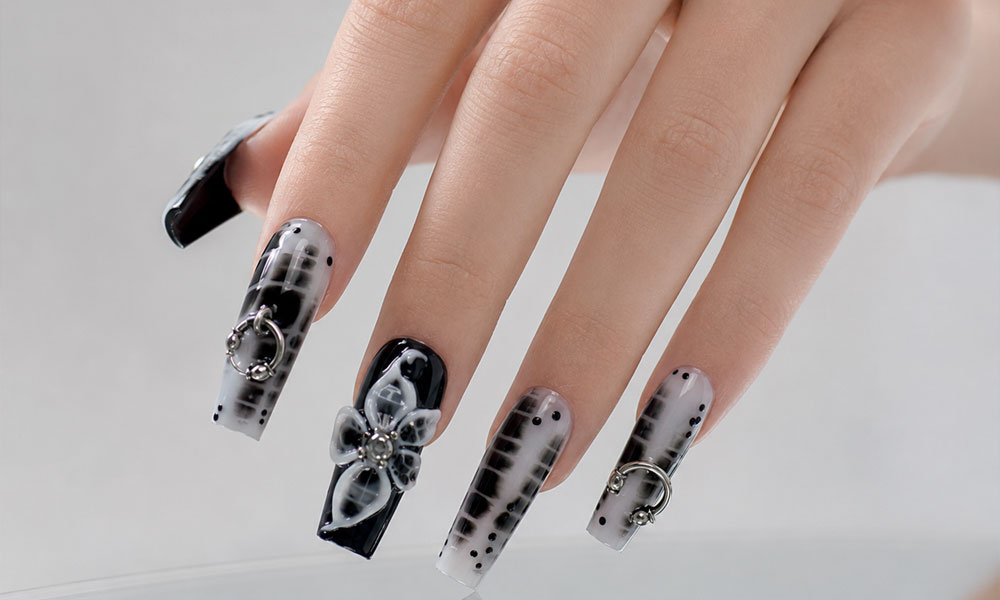
Choosing a press on nail supplier should involve much more than approving an attractive sample.
The sample proves that a supplier can make one acceptable product.
A long-term supplier needs to prove something more difficult:
That it can understand, document, reproduce, inspect, package, and reorder that product consistently.
Buyers should therefore evaluate:
- Actual manufacturing capability
- Sample revision control
- Shape and sizing systems
- Handmade production
- Quality-control processes
- Packaging management
- Material documentation
- Communication
- Production planning
- Reorder control
Structured supplier evaluation and auditing principles emphasize evidence, controlled processes, risk awareness, and consistent performance rather than relying on first impressions alone.
For brands evaluating a press on nail supplier, Xingyi provides information on its materials and quality approach, shape and size options, handmade custom press-on nail collection, and customized services.
Once you have prepared your product brief, expected shapes, design complexity, packaging requirements, quality criteria, and launch plan, you can contact Xingyi to discuss samples and evaluate whether its production system fits your long-term sourcing needs.