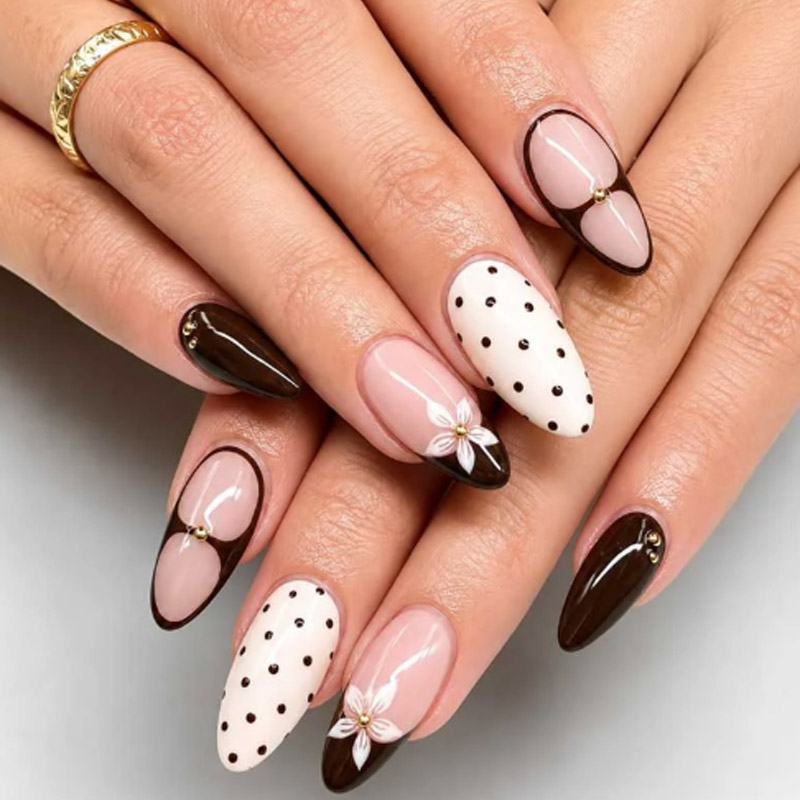
A beautiful nail set can lose much of its impact when the packaging makes customers work too hard to understand what they are buying.
For beauty brands, press on nail boxes are not simply containers. They are one of the first places where product design, brand identity, customer information, and physical protection come together.
Within a few seconds, the packaging may need to help a customer understand whether the nails are short or long, almond or square, minimal or highly decorative, how many pieces are included, and whether accessories come with the set. At the same time, the box has to protect the nails from movement, scratching, crushed decorations, and contact with other components.
That makes press on nail boxes a product-development decision rather than a graphic-design task left until the end.
Beauty packaging in 2026 is also moving toward greater transparency, more intentional material use, connected features such as QR codes, and clearer environmental communication rather than vague sustainability language.
For private label buyers, the practical question is therefore:
> What must the package communicate, and what should it leave to the product page or instruction card?
This guide explains how to structure press on nail boxes for retail-ready collections without overcrowding the package or losing sight of product protection.
Start Press On Nail Boxes With the Actual Nail Set
The outer box should not be designed before the product has been defined.
Before choosing dimensions for press on nail boxes, confirm the physical characteristics of the nail set:
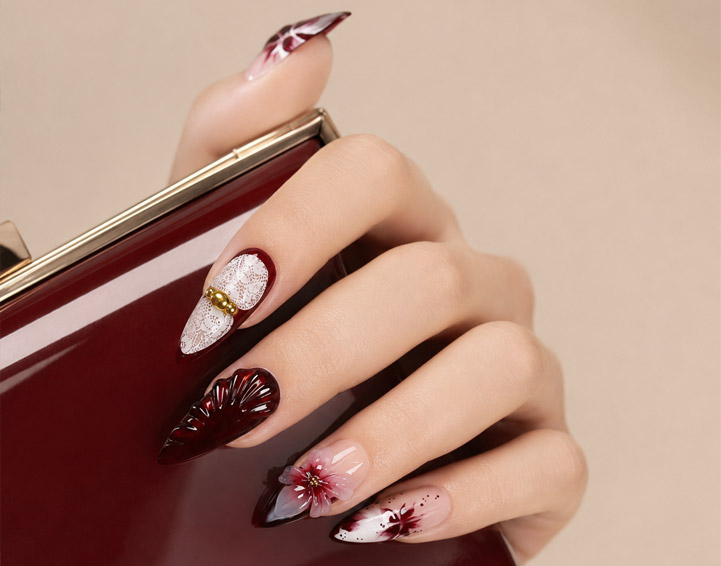
Shape, length, number of tips, largest nail dimensions, nail curvature, decoration height, included accessories, and how the nails should be arranged inside the package all affect the packaging structure.
A short square set with flat artwork may require relatively little internal height. A long almond set with pearls and sculpted flowers may require substantially more clearance.
This is why using one universal box for every SKU can create problems.
The packaging needs to fit the product rather than forcing the product to fit an existing package.
For brands still defining shape and size specifications, Xingyi’s shape and size guide can help establish the physical requirements before the packaging sample is approved.
The Front of Press On Nail Boxes Should Answer the Fastest Questions
The front panel has limited space, so it should prioritize information customers need immediately.
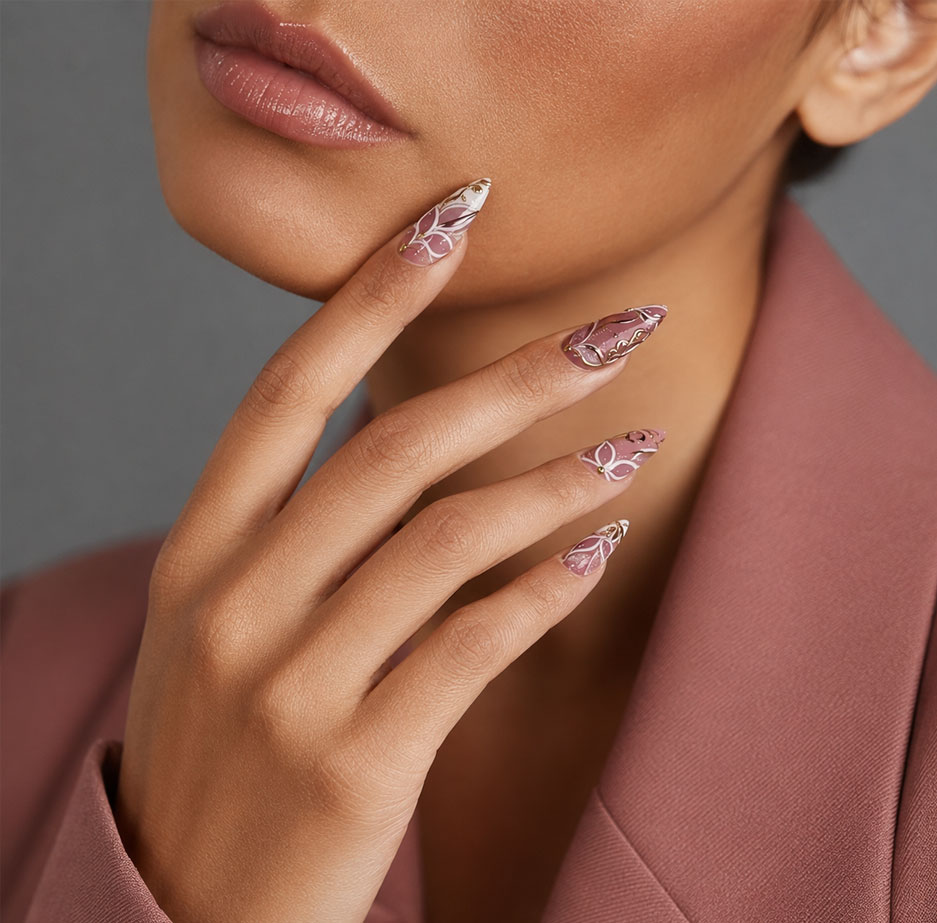
For many press on nail boxes, that means communicating the brand, product identity, shape, length, and nail quantity without turning the front into a wall of text.
A clear information hierarchy might read:
Brand Name
Collection Name
Press-On Nails
Medium Almond · 24 Nails
The exact format can change, but the hierarchy should remain easy to scan.
Customers should not need to turn the box over just to discover whether the nails are short square or long coffin.
For private label collections containing several shapes, consistent naming becomes even more important.
If one package says “Medium Almond,” another should not describe the same shape as “Classic Almond” unless those terms genuinely refer to different products.
Consistent press on nail boxes make the assortment easier for customers, retailers, and internal product teams to understand.
Make Shape and Length Easy to Distinguish
Shape is one of the strongest visual differences between press-on nail products, while length can significantly change the wearing experience.
For that reason, both deserve clear treatment on press on nail boxes.
Useful naming structures include:
Short Square
Medium Almond
Long Coffin
Short Oval
Brands may also add a small silhouette illustration when the package design allows it.
This becomes particularly helpful when several products use similar colors or artwork.
Imagine a collection containing the same burgundy cat-eye finish in short almond, medium almond, and long coffin. If the front panels look nearly identical, customers need another clear way to distinguish them.
Shape and length labeling solves part of that problem without requiring a completely different package for each SKU.
Nail Count Should Be Obvious
Customers should know how many nail pieces are included.
A package containing a fixed ten-piece custom-sized set is a different product proposition from one containing multiple sizes intended to help customers find the closest fit.
The number should therefore be included clearly on press on nail boxes where relevant.
For example:
24 Nails
30 Nail Tips
Custom 10-Piece Set
The wording should reflect what is genuinely inside the package.
Avoid using vague phrases such as “Full Set” if customers could reasonably interpret that in several ways.
If the package also contains adhesive tabs, a file, preparation pad, or other components, those items can be identified separately rather than being confused with the nail count.
Decide How Much of the Product Should Be Visible
For highly visual press-on nail collections, the product itself can become the strongest design element on the package.
Transparent windows or clear lids can allow customers to see:
Color, artwork, shape, decoration, surface finish, and overall set composition.
This can be especially valuable for handmade products.
A customer considering hand-painted florals or 3D decorations may want to inspect the actual nail rather than relying entirely on printed photography.
However, transparent press on nail boxes place more pressure on the internal presentation.
If the product is visible, customers can also see:
Misaligned nails, poorly organized accessories, dust, scratches on the transparent material, and excessive movement inside the tray.
The more transparent the package becomes, the cleaner the internal layout needs to be.
For brands developing handmade products, Xingyi’s handmade custom press-on nail collection provides examples of products where the physical design itself can become an important part of the retail presentation.
The Tray Is Just as Important as the Outer Box
Many buyers spend most of their time reviewing printed artwork while giving less attention to the tray.
That can be a mistake.
The internal tray determines how well press on nail boxes display and protect the product.
A good tray should hold nails securely enough to limit movement while still allowing the customer to remove them without unnecessary difficulty.
Spacing also matters.
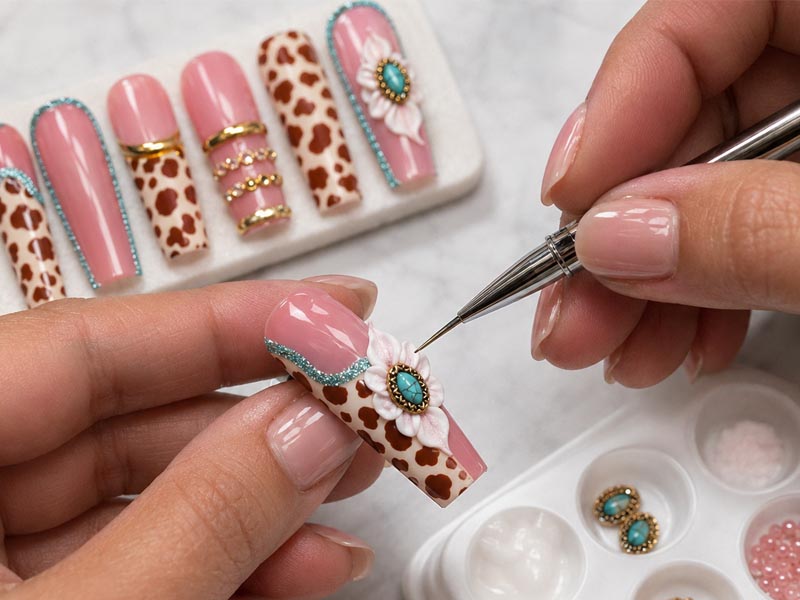
Flat nail designs may be able to sit relatively close together. Products containing pearls, rhinestones, charms, or 3D flowers need more clearance.
The tray should be tested using the actual finished samples.
Digital dimensions alone cannot reliably show whether a raised flower will contact the lid or whether two neighboring decorations will touch during transport.
3D Nails Need Deeper Press On Nail Boxes
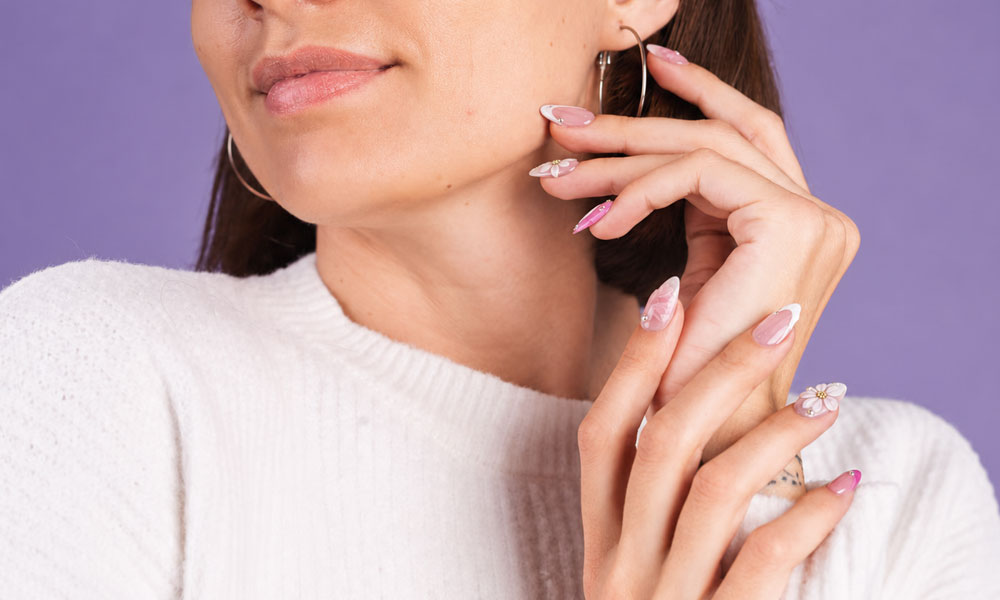
Three-dimensional decoration changes packaging requirements quickly.
For decorated products, measure the highest point of the finished nail, not simply the thickness of the underlying tip.
This is particularly important for press on nail boxes containing:
3D flowers, pearls, large rhinestones, charms, bows, sculptural gel effects, or layered decorative components.
Vertical clearance should prevent the decoration from being compressed when the package closes.
Horizontal spacing also matters because some flowers or charms extend beyond the sidewalls of the nail.
A box can technically close while still applying pressure to the decoration.
That is why the complete package should be physically tested before bulk packaging production.
Accessories Need Their Own Planned Space
A retail press-on set may contain more than nails.
Depending on the product configuration, it may also include nail glue, adhesive tabs, a file, wooden stick, preparation pad, or instruction card.
These components should have defined positions inside press on nail boxes.
Leaving accessories loose can create several problems. They may cover the nails, move into decorated areas, scratch surfaces, or make the package look disorganized.
If a product includes both adhesive tabs and glue, the packaging should also make it clear that both are part of the set.
The complete bill of materials should therefore be confirmed before the tray and outer box are finalized.
Use the Back Panel for Instructions and Practical Information
The front sells the product. The back can explain it.
Depending on the product and target market, press on nail boxes may use the back or side panels for application instructions, removal guidance, accessory information, company information, warnings, barcode placement, or other required details.
Brands selling cosmetic products or cosmetic components in the United States should review the applicable labeling rules rather than copying packaging text from another product. FDA guidance explains that cosmetics marketed in the United States must comply with relevant labeling rules, and that required information must be presented prominently and truthfully.
The exact requirements depend on what the finished kit contains and how the individual components are classified.
For that reason, press on nail boxes containing nail glue or another regulated nail-related component should be reviewed as complete kits rather than assuming the decorative nail tips determine every labeling requirement.
The FDA cosmetics labeling resources provide an authoritative starting point for U.S.-bound beauty products.
Keep Application Instructions Short Enough to Read
Instructions are useful only when customers can actually understand them.
Trying to place a long paragraph in small type on press on nail boxes usually reduces usability.
A better solution is to keep essential steps concise and move more detailed instructions to an insert card or digital guide.
The box might briefly communicate preparation, sizing, application, and removal, while an insert provides more detailed explanations.
The instructions should match the actual kit.
If the set contains adhesive tabs, do not use instructions written only for glue. If both application methods are supported, distinguish them clearly.
QR Codes Can Extend the Limited Packaging Space
A QR code can help press on nail boxes remain visually clean while connecting customers to additional information.
Possible destinations include application videos, sizing instructions, removal guides, collection information, care guidance, or the brand’s customer-support page.
Connected packaging technologies, including QR codes, remain an active direction in beauty packaging in 2026.
However, QR codes should supplement the physical package.
They should not be used as a reason to remove information that legally needs to appear on the product or accompanying labeling.
For a private label brand, the QR destination should also be maintained over time. A printed code is only useful if the landing page still exists when the customer scans it.
Avoid Filling Press On Nail Boxes With Unverified Claims
Packaging space is valuable, so every statement should earn its place.
Claims such as “eco-friendly,” “non-toxic,” “hypoallergenic,” or “completely safe” should not be added simply because they make press on nail boxes sound more persuasive.
In the United States, FDA guidance requires cosmetic labeling claims to be truthful and not misleading.
Environmental claims need similar care. The FTC advises marketers against broad, unqualified environmental benefit claims such as “green” or “eco-friendly” and states that environmental claims should be specific and substantiated.
Instead of writing:
Eco-Friendly Box
a brand should first determine what specific packaging attribute it can actually document.
Specific information is more credible than vague green language.
Standardize Press On Nail Boxes Where Possible
Private label customization does not require a completely different physical package for every nail design.
A scalable packaging system might use three formats:
Standard format: short and medium flat designs
Long format: long almond, coffin, and stiletto
Deep format: high 3D decoration
Within those structures, artwork, collection names, color bands, and product labels can change.
This approach makes press on nail boxes easier to manage as the catalog expands.
It also reduces the chance that a new design accidentally uses a package that does not physically suit the product.
Packaging Should Help Customers Understand Product Families
A larger press-on nail catalog can quickly become difficult to navigate.
Packaging can create visual organization.
For example, a brand might use the same basic press on nail boxes while changing a small collection identifier:
Everyday Collection — neutral band
Fashion Collection — stronger seasonal accent
Handmade Collection — handmade designation
Occasion Collection — event-specific accent
The goal is not to create unnecessary complexity.
It is to let customers understand where each product belongs while preserving overall brand consistency.
The logo, typography, information hierarchy, and structural format should still feel related.
Test Retail Packaging Before Bulk Production
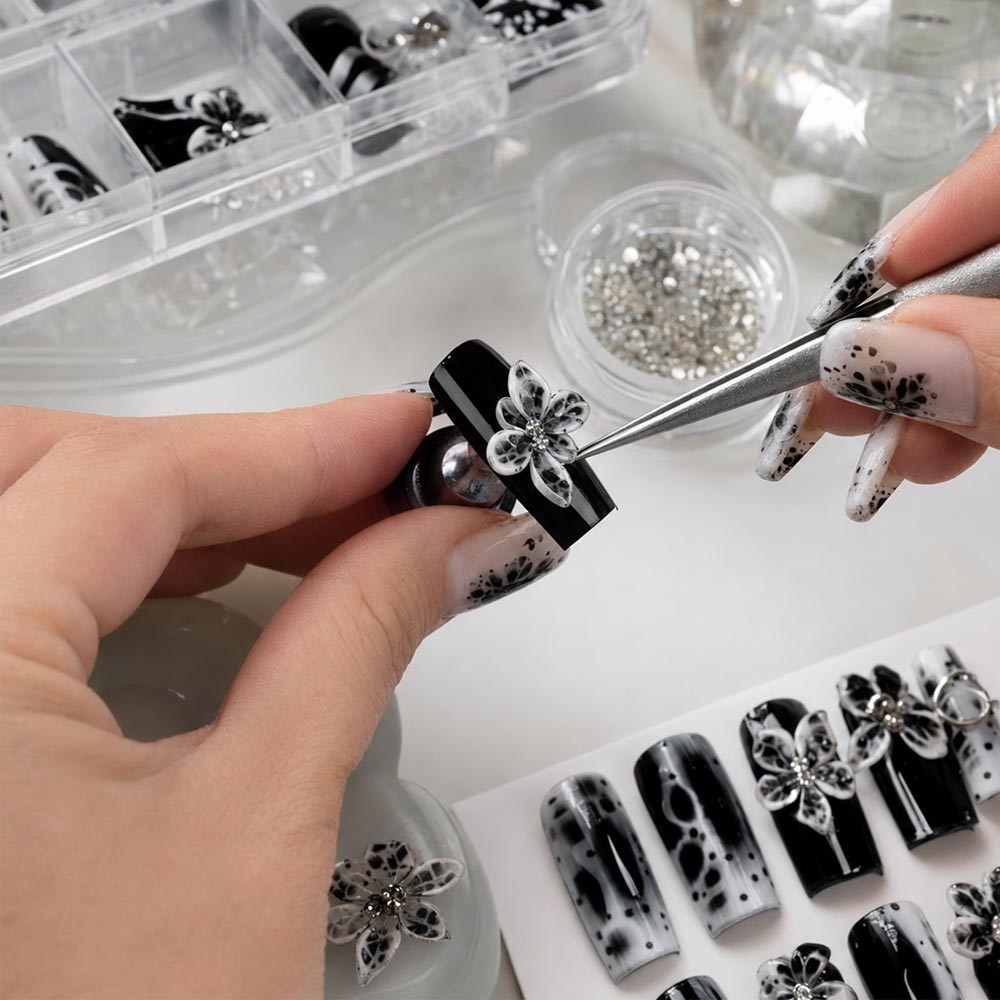
Every important packaging format should eventually be tested physically.
The simplest final check is to assemble the complete retail product exactly as the customer would receive it.
Then inspect whether the press on nail boxes:
Protect the nails, hold the tray securely, keep accessories in place, provide enough 3D clearance, close correctly, display the artwork clearly, and remain easy to open.
For e-commerce products, also think about what happens when the retail package is placed inside a shipping carton.
A beautiful retail box that allows the product to move excessively during handling is not fully developed.
Keep one approved complete package as a production reference.
That reference should include the box, tray, product arrangement, insert, accessories, and final printed artwork.
A Practical Press On Nail Boxes Approval Checklist
Before bulk production, confirm the product fit, tray spacing, decoration clearance, accessory placement, logo, collection name, shape, length, nail count, application information, packaging version, and physical sample.
The packaging should also answer a simple customer question:
> Can I understand what this product is without needing someone to explain it to me?
If the answer is no, the box still needs work.
For private label projects, Xingyi’s customized services can support discussions around the nail product, logo, packaging structure, inserts, artwork, and set configuration together rather than treating them as unrelated decisions.
Conclusion
Effective press on nail boxes do three things at the same time: they explain the product, protect it, and reinforce the brand.
The front of the box should quickly communicate the most important differences, especially product identity, shape, length, and nail quantity. The back or insert can carry more detailed instructions and additional product information.
Internally, the tray should be designed around the actual nails.
Long shapes, high curvature, large charms, rhinestones, and 3D flowers can all change the amount of space a product needs. Accessories should also have defined positions rather than moving freely around the box.
For larger private label collections, standardizing a small number of press on nail boxes can make future product development much easier. Different artwork can create seasonal or collection-specific identities while the underlying packaging system remains controlled.
Brands should also be careful with packaging claims. Regulatory and environmental statements should be based on the real product and packaging rather than broad language that cannot be supported.
If you are developing new press on nail boxes, you can review Xingyi’s customized services, shape and size guide, and handmade custom press-on nails before finalizing the box structure.
When your nail shape, length, set quantity, decorations, accessories, branding, and package concept are ready, you can contact Xingyi to discuss a complete private label packaging sample.